
From Video Reviews to Agentic Commerce: What We’re Building at AdScout

As AI becomes more involved in how products are discovered, compared, and purchased, brands will need stronger ways to communicate real value. At AdScout, we are building the infrastructure to connect authentic customer experiences with the moments when people and AI systems make decisions. Our AI Campaign Assistant is the first step in that direction.
As AI becomes more involved in how products are discovered, compared, and purchased, brands will need stronger ways to communicate real value. At AdScout, we are building the infrastructure to connect authentic customer experiences with the moments when people and AI systems make decisions. Our AI Campaign Assistant is the first step in that direction.
The attention economy has made it possible for brands to produce and distribute more content than ever. It has also made attention harder to earn and trust more important once a brand has it.
People making a purchase want evidence that a product delivers what it promises. The most credible evidence often comes from customers and creators who can show the product in use, explain their experience, and speak to the details that matter during a buying decision.
Commerce is now entering another shift. AI is becoming more involved in how people discover, compare, evaluate, and eventually purchase products. As that happens, the infrastructure behind commerce will need to carry more than product descriptions and specifications. Real customer experiences, creator content, structured feedback, performance data, and trusted recommendations can all become relevant inputs into AI-assisted purchasing journeys.
The goal is simple: a business should be able to launch and optimize a high-quality video review campaign without needing previous experience in creator marketing, video production, or campaign management.
Our AI Campaign Assistant is one of the first products we are building within that direction.
Turning a complex campaign into one connected process
A video review campaign sounds straightforward: choose a product, invite creators, collect their videos, publish the strongest content, and measure the results.
Every stage depends on a series of decisions. The business needs to identify the products that would benefit from video reviews, define the focus of the creator brief, choose the right incentives and recruitment channels, and decide where the finished videos should appear. Once the content is live, it also needs to understand what is working and use that information in the next campaign.
Today, running a sophisticated creator campaign can involve several tools, agencies, spreadsheets, communication channels, analytics platforms, and people. We are building the AI Campaign Assistant to bring those decisions and actions into one workflow.
Our goal? To make it possible for a business to launch and optimize a high-quality video review campaign without previous experience in creator marketing, video production, or campaign management. It gives smaller teams access to a process that would otherwise require more resources and larger organizations a model that is easier to scale and repeat.
A campaign that starts with a conversation
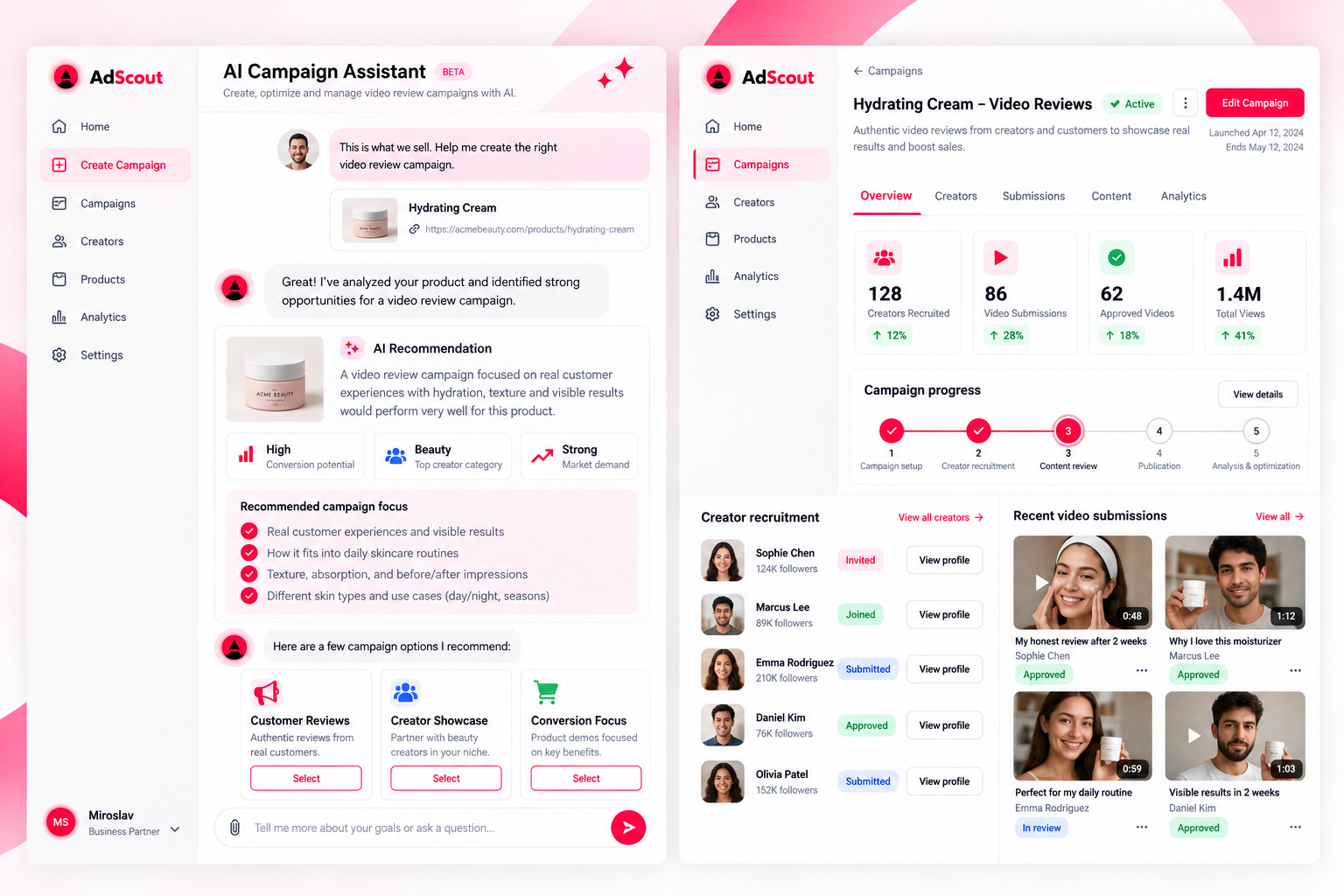
It’s high time we designed assistants around a conversational experience. A user will be able to explain the business objective, select a product or service, or provide the relevant page. The assistant will request any missing information, recommend options, and turn that initial input into a structured campaign.
Instead of starting with:
“Tell us exactly how you want to configure your campaign.”
we want businesses to be able to start with:
“This is what we sell. Help me create the right video review campaign.”
From there, the assistant takes a more active role in determining which campaign should be created and how it should be configured.
Product and page intelligence are central to the version we are developing. The assistant will analyze the products, services, and relevant pages connected to a campaign, using available product information, positioning, page content, existing customer communication, and other relevant inputs.
The analysis will help identify the strongest opportunities for video content, what creators should focus on, and what kind of review could add the most value, and the recommendation then informs the creator brief, content direction, incentives, and other campaign parameters.
Bringing creators and customers into the same workflow
Once the campaign is ready, the automation continues into recruitment. Campaigns can be published through our ecosystem to reach relevant creators and integrated into the participating business’s website.
This allows brands to involve professional creators, existing customers, community members, and people who already have a genuine connection with their products. Recruitment remains connected to the brief, submissions, approvals, and content management.
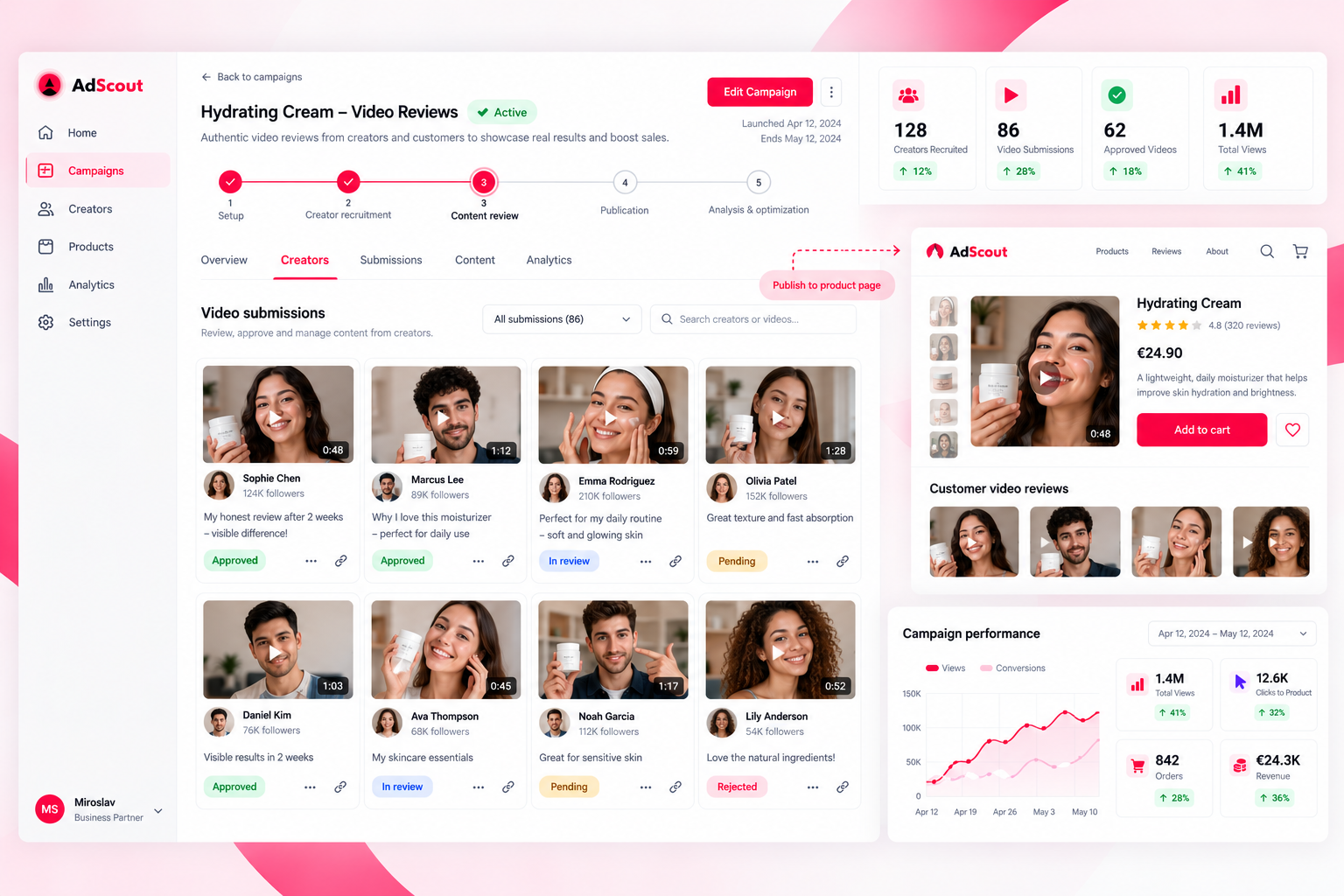
As creators submit their video reviews, the platform manages the content and prepares approved videos for publication, bringing the customer experience captured on camera into the commerce journey.
This way, trust is built close to the decision. A video review can give a potential customer useful context while they are evaluating a product, using the experience of another person to make the value clearer and more credible.
Publication begins the learning loop
Approved video reviews can be published automatically on the business’s website and placed where they have the strongest potential to support the customer journey.
From there, we can collect performance data, compare placements and content variations, and run A/B tests. Those findings can inform the recommendations made for future campaigns.
We are building this as a continuous feedback loop:
Analyze → Create → Recruit → Publish → Measure → Learn → Improve
Over time, the AI Campaign Assistant is intended to learn which products benefit most from video reviews, which content approaches perform better, where videos should appear, and how different campaign configurations affect results.
Every campaign therefore has two outputs: content that can support current purchasing decisions and information that can improve the next campaign. This is what turns a collection of campaign tasks into a system that becomes more useful with continued use.
Creating content for agentic commerce
The next stage extends this work into agentic commerce. We are developing technology that will connect the intelligence and authentic content generated through these campaigns with AI-driven product discovery and decision-making.
Product information gives an AI system a structured account of what a product is. Customer experiences can add context around how it is used, who finds it valuable, and how that value appears. Campaign performance can provide another layer of information about which content and placements prove useful during the customer journey.
Bringing these inputs together can help businesses prepare their content and commerce infrastructure for a market in which AI plays a larger role in purchasing. It can also give authentic human experience a defined place within those systems, allowing brands to communicate real value in a form that both customers and AI tools can use.
The first US pilot
The deployment will allow us to validate the full cycle in a real commercial environment: understanding the product, shaping the campaign, recruiting participants, managing submissions, publishing approved reviews, and learning from their performance.
It is an important step toward the larger infrastructure we want to build. Our role is to make authentic customer experience usable throughout the decision process, from the first campaign brief to the emerging world of agentic commerce.
Related posts

Official launch of AdScout
AdScout – all-in-one network of reliable recommendations, conversion platform and personalised navigator for consumers

Smart Video Review Containers - Dynamic Trust, Anywhere on Your Site
At AdScout, we’re making authentic recommendations easier to showcase than ever. With our new Smart Video Review Containers, every store, b…

Affiliate link - how it works and tricks for more clicks
Affiliate links and cookies are key elements in affiliate marketing. The article covers how they work and shares strategies to drive more c…